
MongoDB

Goal: Go beyond “it’s a JSON database” and understand MongoDB’s internal mechanics, scaling strategies, indexing, and aggregation. 🧠
1. Philosophy & Document Model
Why MongoDB?
Relational databases normalize data across many tables (e.g., Users, Orders, Payments) and rely on JOINs. At scale, JOINs can be expensive. MongoDB’s guiding principle is:
Data that is accessed together should be stored together. 📦
Benefits:Aligns naturally with object-oriented models 🧩
Reduces impedance mismatch 🔧
Fewer JOINs → faster reads ⚡
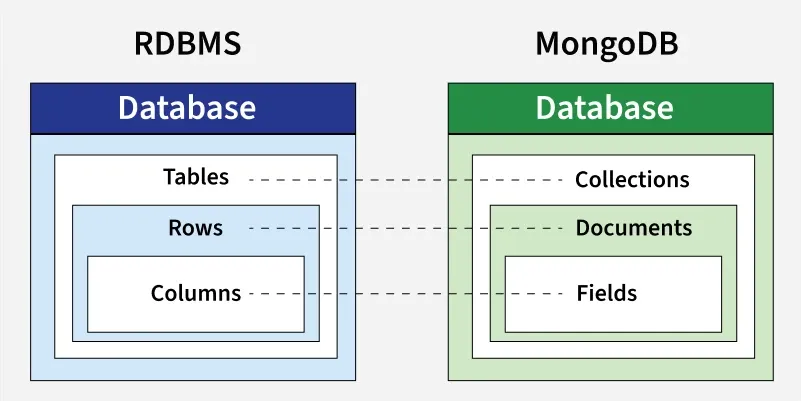
RDBMS vs MongoDB
BSON (Binary JSON)
MongoDB stores data as BSON (not plain JSON).
Why BSON?
- Rich data types: Date, Binary, Int32/Int64/Decimal128, ObjectId, etc. 🧬
- Faster traversal than text JSON 🏃
- Optimized for indexing and storage 📦
The_idField (ObjectId) 🔑 - 12 bytes: 4 bytes timestamp, 5 bytes random, 3 bytes counter
- Creation time can be extracted from
_id⏲️
Json:
{
  "name": "Spring Boot",
  "completed": false,
  "videos": 160,
  "likes": 10400,
  "registrations": 4600,
  "instructors": ["Prakash"],
  "tech": ["Java", "Spring"],
  "level": "Advanced"
}
MQl:
{
    name: "Spring Boot",
    completed: false,
    videos: 160,
    likes: 10400,
    registrations: 4600,
    instructors: ["Prakash"],
    tech: ["Java", "Spring"],
    level: "Advanced",
    date:Date()
  }
2. Core Mechanics & CRUD
CRUD Operations
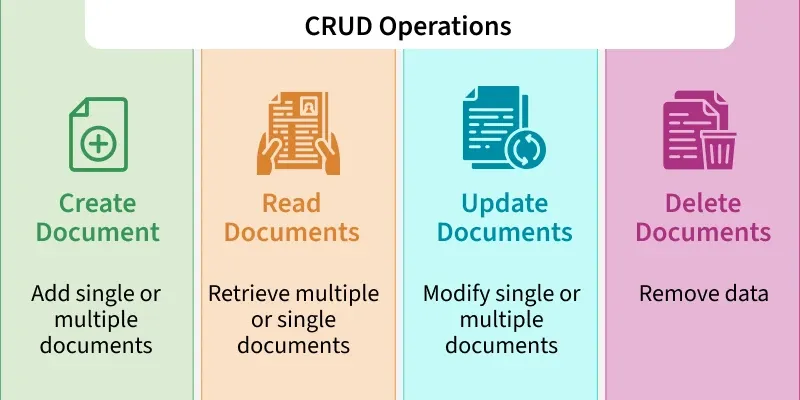
insert ➕
insertOne()insertMany()(atomic per-document)
Update operators (key ones) ✏️$set→ update specific fields$inc→ atomic increments (safe for concurrency)$push→ append to arrays$addToSet→ append if not present$unset→ remove fields
Atomicity example 🔒
// BAD: Read-modify-write (race condition)
let user = db.users.findOne({ _id: 1 });
user.visits++;
db.users.save(user);
// GOOD: Atomic operator
db.users.updateOne({ _id: 1 }, { $inc: { visits: 1 } });
Schema Design: Embed vs Reference
Embedding (default) 📚
- Fast reads ⚡
- Single query fetches all related data 🎯
- Bound by 16MB document size
- Ideal when relationship is bounded and frequently read together
Referencing 🔗 - Better for unbounded growth (logs, events, analytics)
- Avoids document bloat
- Requires additional queries or aggregation
$lookupwhen joining
Rule of thumb: - Embed when data is mostly read together and bounded 📚
- Reference when data grows without bound or is shared across many parents 🔗
3. Aggregation Framework
Concept 🧠
- Aggregation is a pipeline of stages, similar to Linux pipes:
Input → Filter → Group → Transform → Output
Key stages 🧱 $match→ filter early (use indexes) 🧹$group→ aggregate 🧮$lookup→ left outer join across collections 🔍$project→ reshape fields 🧭$sort→ ordering (ideally with supporting index) 📑
Example: Total Revenue per Category 💵📦
db.orders.aggregate([
  { $match: { status: "completed" } },
  {
    $group: {
      _id: "$product_category",
      totalRevenue: { $sum: "$amount" },
    },
  },
  { $sort: { totalRevenue: -1 } },
]);
Note ℹ️
- Aggregation runs inside MongoDB’s C++ engine and is typically much faster than app-side processing.
- Place
$matchas early as possible to reduce the working set.
4. Indexing
Collection Scan (COLLSCAN)
Without indexes, MongoDB scans every document:
- Complexity: O(N)
- CPU spikes, disk I/O bottlenecks, poor latency at scale
Analogy: Searching a shuffled phone book page by page.
B-Tree Index (IXSCAN)
MongoDB uses B-Tree indexes.
Index stores:
- Indexed field value
- Pointer to document location
Complexity: - O(log N)
- 1M docs ≈ ~20 steps; 1B docs ≈ ~30 steps
- Scales with minimal performance cost
COLLSCAN vs IXSCAN
- COLLSCAN (Collection Scan) ❌
- Scans all documents
- Time complexity: O(N)
- Degrades with dataset size
Example (No index)
db.courses.find({ name: "kubernetes" }).explain("executionStats");
// Key fields (conceptually)
stage: COLLSCAN;
totalDocsExamined: 43;
nReturned: 1;
totalKeysExamined: 0;
Interpretation 🧩:
- MongoDB examined 43 docs to return 1 result → inefficient.
Problems ⚠️: - High CPU, heavy I/O, slow APIs, not production-ready at scale.
- IXSCAN (Index Scan) ✅
- Uses index for lookup
- Time complexity: O(log N)
- Scales well with large datasets
Create index:
db.courses.createIndex({ name: 1 });Example (With index)
db.courses.find({ name: "kubernetes" }).explain("executionStats");
// Key fields (conceptually)
stage: FETCH;
inputStage: IXSCAN;
totalDocsExamined: 1;
totalKeysExamined: 1;
nReturned: 1;
Interpretation 🧩:
- Index found the key “kubernetes”; FETCH retrieved the document.
Why FETCH appears with IXSCAN? 🤔 - Indexes don’t store full documents, only keys and pointers.
- IXSCAN → find pointer; FETCH → load document.
- Covered Query (No FETCH)
A query is covered when:
- All requested fields are in the index
- MongoDB does not fetch the document
Example:
db.courses.createIndex({ name: 1 });
db.courses
  .find({ name: "kubernetes" }, { _id: 0, name: 1 })
  .explain("executionStats");
// stage: IXSCAN (no FETCH)
Fastest possible query for that access pattern.
Key comparison 📊
- Uses Index: COLLSCAN ❌ vs IXSCAN ✅
- Docs Examined: All vs Only matching
- Complexity: O(N) vs O(log N)
- Production readiness: COLLSCAN ❌ vs IXSCAN ✅
Golden performance rule 🎯 - Aim for
totalDocsExamined == nReturned - If not equal, check indexes and query shape.
Compound Indexes & ESR Rule
Field order matters.
ESR Rule:
- E – Equality: exact match fields first
- S – Sort: fields used for sort next
- R – Range: range predicates last
Correct ordering avoids expensive in-memory sorts and maximizes index utility.
Index Trade-Offs
Indexes improve reads but add write overhead.
Each write must:
- Write the document
- Update every relevant index
Too many indexes can cause:
- Slower writes
- Higher RAM usage
- Disk swapping if index working set exceeds RAM
Verification with explain()
Use:
db.collection.find(query).explain("executionStats")
Check:totalDocsExamined,totalKeysExamined,nReturned
Goal:totalDocsExamined == nReturnedfor selective queries
5. Replication & Sharding
Replication
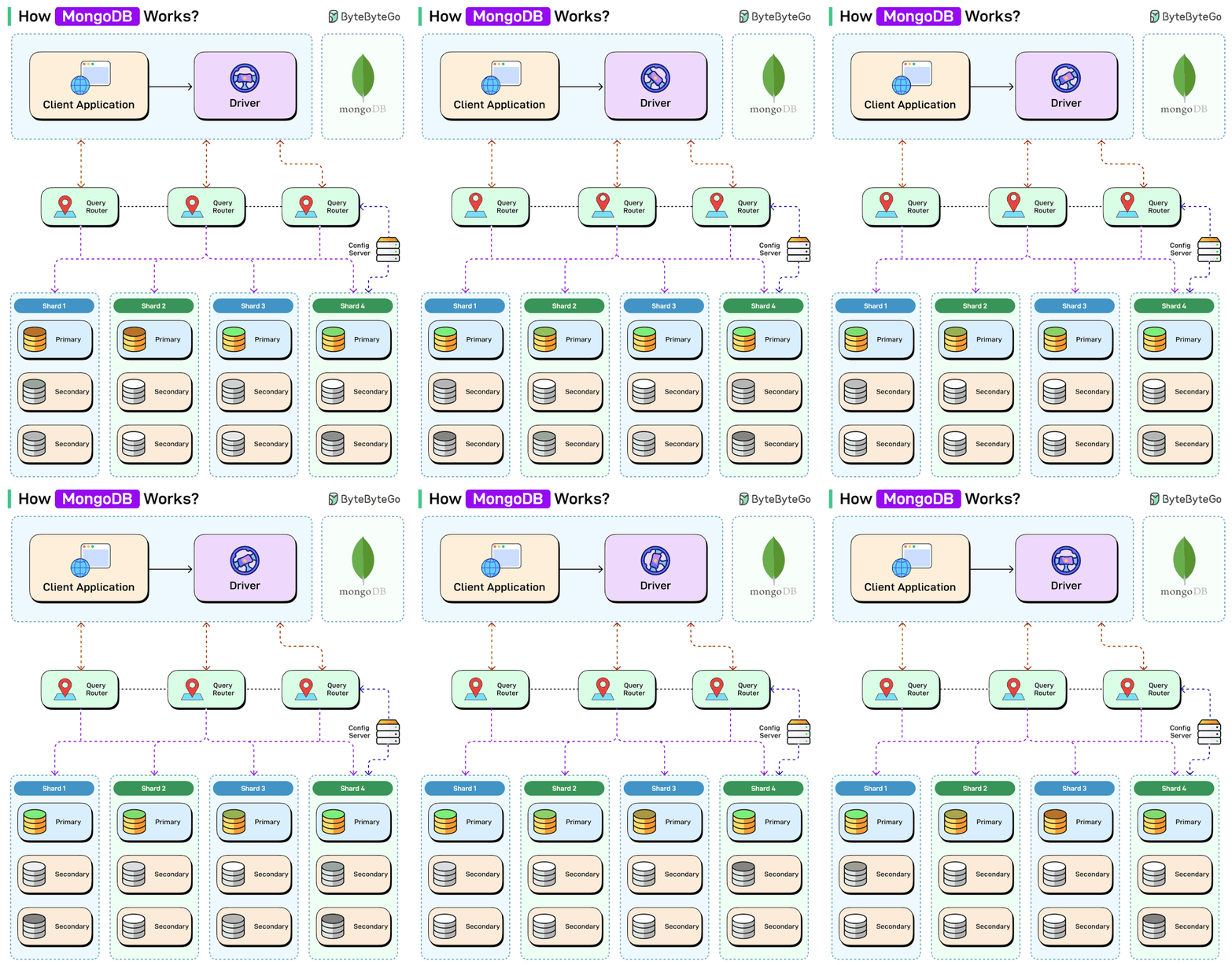
Replica set roles:
- Primary → handles writes
- Secondary → replicates data
- Automatic election on failure
Oplog 📝: - Primary writes operations to the oplog
- Secondaries tail the oplog to stay in sync
Read preferences 📖: - Reads can be routed to secondaries (with consistency caveats)
Sharding
Problem ❗:
Single server cannot handle massive datasets or throughput.
Solution ✅:
Split data across shards.
Components 🧰:
mongos→ query routerConfig servers → metadata
Shards → data storage
Shard Key 🔑:Critical design decision
Poor choice causes hot shards and bottlenecks
Prefer keys with good cardinality and balanced distribution
6. Advanced Features
ACID Transactions
- Supported since MongoDB 4.0
- Snapshot isolation
- Commit/rollback
Use cases 💼: - Financial systems, inventory, multi-document consistency
Time Series Collections
Optimized for:
- IoT sensors, logs, stock prices
Benefits: - Automatic compression
- High write throughput
- Efficient storage layout
Atlas Vector Search
- Stores vector embeddings
- Enables semantic similarity search
- Used in AI/LLM applications
7. Final Takeaways
- NoSQL = Not Only SQL
- Schema validation is optional but powerful
- Indexes are mandatory for performance
- MongoDB excels at large-scale, evolving, semi-structured data
Best fit 👍: - User profiles
- Product catalogs
- Content platforms
- IoT & real-time systems
SQL still best for 🏦: - Strong relational integrity
- Highly structured financial systems
How MongoDB Works
MongoDB Queries
Connect MongoDB Shell
mongo # connects to mongodb://127.0.0.1:27017 by defaultmongo --host <host> --port <port> -u <user> -p <pwd> # omit the password if you want a promptmongo "mongodb://192.168.1.1:27017"mongo "mongodb+srv://cluster-name.abcde.mongodb.net/<dbname>" --username <username> # MongoDB AtlasHelpers
Show dbs :
db; // prints the current databaseSwitch database :
use <database_name>Show collections :
show collectionsRun JavaScript file :
load("myScript.js");CRUD
Create
db.coll.insertOne({ name: "Max" });
db.coll.insertMany([{ name: "Max" }, { name: "Alex" }]); // ordered bulk insert
db.coll.insertMany([{ name: "Max" }, { name: "Alex" }], { ordered: false }); // unordered bulk insert
db.coll.insertOne({ date: ISODate() });
db.coll.insertMany(
  { name: "Max" },
  { writeConcern: { w: "majority", wtimeout: 5000 } },
);
Delete
db.coll.deleteOne({ name: "Max" });
db.coll.deleteMany({ $and: [{ name: "Max" }, { justOne: true }] }); //delete all entries which contain both values
db.coll.deleteMany({ $or: [{ name: "Max" }, { justOne: true }] }); //delete all entries which contain any of the specified values
db.coll.deleteMany({}); // WARNING! Deletes all the docs but not the collection itself and its index definitions
db.coll.deleteMany(
  { name: "Max" },
  { writeConcern: { w: "majority", wtimeout: 5000 } },
);
db.coll.findOneAndDelete({ name: "Max" });
Update
db.coll.updateMany({ _id: 1 }, { $set: { year: 2016 } }); // WARNING! Replaces the entire document where "_id" = 1
db.coll.updateOne({ _id: 1 }, { $set: { year: 2016, name: "Max" } });
db.coll.updateOne({ _id: 1 }, { $unset: { year: 1 } });
db.coll.updateOne({ _id: 1 }, { $rename: { year: "date" } });
db.coll.updateOne({ _id: 1 }, { $inc: { year: 5 } });
db.coll.updateOne({ _id: 1 }, { $mul: { price: 2 } });
db.coll.updateOne({ _id: 1 }, { $min: { imdb: 5 } });
db.coll.updateOne({ _id: 1 }, { $max: { imdb: 8 } });
db.coll.updateMany({ _id: { $lt: 10 } }, { $set: { lastModified: ISODate() } });
Array Operations
db.coll.updateOne({ _id: 1 }, { $push: { array: 1 } });
db.coll.updateOne({ _id: 1 }, { $pull: { array: 1 } });
db.coll.updateOne({ _id: 1 }, { $addToSet: { array: 2 } });
db.coll.updateOne({ _id: 1 }, { $pop: { array: 1 } }); // last element
db.coll.updateOne({ _id: 1 }, { $pop: { array: -1 } }); // first element
db.coll.updateOne({ _id: 1 }, { $pullAll: { array: [3, 4, 5] } });
db.coll.updateOne({ _id: 1 }, { $push: { scores: { $each: [90, 92, 85] } } });
db.coll.updateOne({ _id: 1, grades: 80 }, { $set: { "grades.$": 82 } });
db.coll.updateMany({}, { $inc: { "grades.$[]": 10 } });
db.coll.updateMany(
  {},
  { $set: { "grades.$[element]": 100 } },
  { arrayFilters: [{ element: { $gte: 100 } }] },
);
Update Many
db.coll.updateMany({ year: 1999 }, { $set: { decade: "90's" } });FindOneAndUpdate
db.coll.findOneAndUpdate(
  { name: "Max" },
  { $inc: { points: 5 } },
  { returnNewDocument: true },
);
Upsert
db.coll.updateOne(
  { _id: 1 },
  { $set: { item: "apple" }, $setOnInsert: { defaultQty: 100 } },
  { upsert: true },
);
Replace
db.coll.replaceOne(
  { name: "Max" },
  { firstname: "Maxime", surname: "Beugnet" },
);
Write Concern
db.coll.updateMany(
  {},
  { $set: { x: 1 } },
  { writeConcern: { w: "majority", wtimeout: 5000 } },
);
Find
db.coll.findOne(); // returns a single document
db.coll.find(); // returns a cursor - show 20 results - "it" to display more
db.coll.find().pretty();
db.coll.find({ name: "Max", age: 32 }); // implicit logical "AND".
db.coll.find({ date: ISODate("2020-09-25T13:57:17.180Z") });
db.coll.find({ name: "Max", age: 32 }).explain("executionStats"); // or "queryPlanner" or "allPlansExecution"
db.coll.distinct("name");
Count
db.coll.estimatedDocumentCount(); // estimation based on collection metadata
db.coll.countDocuments({ age: 32 }); // alias for an aggregation pipeline - accurate count
Comparison
db.coll.find({ year: { $gt: 1970 } });
db.coll.find({ year: { $gte: 1970 } });
db.coll.find({ year: { $lt: 1970 } });
db.coll.find({ year: { $lte: 1970 } });
db.coll.find({ year: { $ne: 1970 } });
db.coll.find({ year: { $in: [1958, 1959] } });
db.coll.find({ year: { $nin: [1958, 1959] } });
Logical
db.coll.find({ name: { $not: { $eq: "Max" } } });
db.coll.find({ $or: [{ year: 1958 }, { year: 1959 }] });
db.coll.find({ $nor: [{ price: 1.99 }, { sale: true }] });
db.coll.find({
  $and: [
    { $or: [{ qty: { $lt: 10 } }, { qty: { $gt: 50 } }] },
    { $or: [{ sale: true }, { price: { $lt: 5 } }] },
  ],
});
Element
db.coll.find({ name: { $exists: true } });
db.coll.find({ zipCode: { $type: 2 } });
db.coll.find({ zipCode: { $type: "string" } });
Aggregation Pipeline
db.coll.aggregate([
  { $match: { status: "A" } },
  { $group: { _id: "$cust_id", total: { $sum: "$amount" } } },
  { $sort: { total: -1 } },
]);
Text Search
db.coll
  .find({ $text: { $search: "cake" } }, { score: { $meta: "textScore" } })
  .sort({ score: { $meta: "textScore" } });
Regex
db.coll.find({ name: /^Max/ }); // regex: starts by letter "M"
db.coll.find({ name: /^Max$/i }); // regex case insensitive
Array Queries
db.coll.find({ tags: { $all: ["Realm", "Charts"] } });
db.coll.find({ field: { $size: 2 } }); // impossible to index - prefer storing the size of the array & update it
db.coll.find({
  results: { $elemMatch: { product: "xyz", score: { $gte: 8 } } },
});
Projections
db.coll.find({ x: 1 }, { actors: 1 }); // actors + _id
db.coll.find({ x: 1 }, { actors: 1, _id: 0 }); // actors
db.coll.find({ x: 1 }, { actors: 0, summary: 0 }); // all but "actors" and "summary"
Sort, Skip, Limit
db.coll.find({}).sort({ year: 1, rating: -1 }).skip(10).limit(3);Read Concern
db.coll.find().readConcern("majority");Collections
Drop
db.coll.drop(); // removes the collection and its index definitions
db.dropDatabase(); // double check that you are *NOT* on the PROD cluster... :-)
Create Collection
db.createCollection("contacts", {
  validator: {
    $jsonSchema: {
      bsonType: "object",
      required: ["phone"],
      properties: {
        phone: {
          bsonType: "string",
          description: "must be a string and is required",
        },
        email: {
          bsonType: "string",
          pattern: "@mongodb\.com$",
          description:
            "must be a string and match the regular expression pattern",
        },
        status: {
          enum: ["Unknown", "Incomplete"],
          description: "can only be one of the enum values",
        },
      },
    },
  },
});
Other Functions
db.coll.stats();
db.coll.storageSize();
db.coll.totalIndexSize();
db.coll.totalSize();
db.coll.validate({ full: true });
db.coll.renameCollection("new_coll", true); // 2nd parameter to drop the target collection if exists
Indexes
List
db.coll.getIndexes();
db.coll.getIndexKeys();
Drop Indexes
db.coll.dropIndex("name_1");Hide/Unhide Indexes
db.coll.hideIndex("name_1");
db.coll.unhideIndex("name_1");
Create Indexes
// Index Types
db.coll.createIndex({ name: 1 }); // single field index
db.coll.createIndex({ name: 1, date: 1 }); // compound index
db.coll.createIndex({ foo: "text", bar: "text" }); // text index
db.coll.createIndex({ "$**": "text" }); // wildcard text index
db.coll.createIndex({ "userMetadata.$**": 1 }); // wildcard index
db.coll.createIndex({ loc: "2d" }); // 2d index
db.coll.createIndex({ loc: "2dsphere" }); // 2dsphere index
db.coll.createIndex({ _id: "hashed" }); // hashed index
// Index Options
db.coll.createIndex({ lastModifiedDate: 1 }, { expireAfterSeconds: 3600 }); // TTL index
db.coll.createIndex({ name: 1 }, { unique: true });
db.coll.createIndex(
  { name: 1 },
  { partialFilterExpression: { age: { $gt: 18 } } },
); // partial index
db.coll.createIndex({ name: 1 }, { collation: { locale: "en", strength: 1 } }); // case insensitive index with strength = 1 or 2
db.coll.createIndex({ name: 1 }, { sparse: true });